





-
Oestrogen shapes the architecture of sleep. It supports REM sleep and thermoregulation, working alongside progesterone to ease sleep onset. As these rhythms shift, you can support your body through proven natural levers.
-
Skin and sleep are intimately connected. Oestrogen receptors in the skin guide collagen, hydration, and barrier function. Supporting sleep supports skin from the inside out.
-
Your cycle is a beautiful, predictable map. The luteal phase reliably softens sleep quality. Tracking the rhythm replaces self-blame with informed self-care.
-
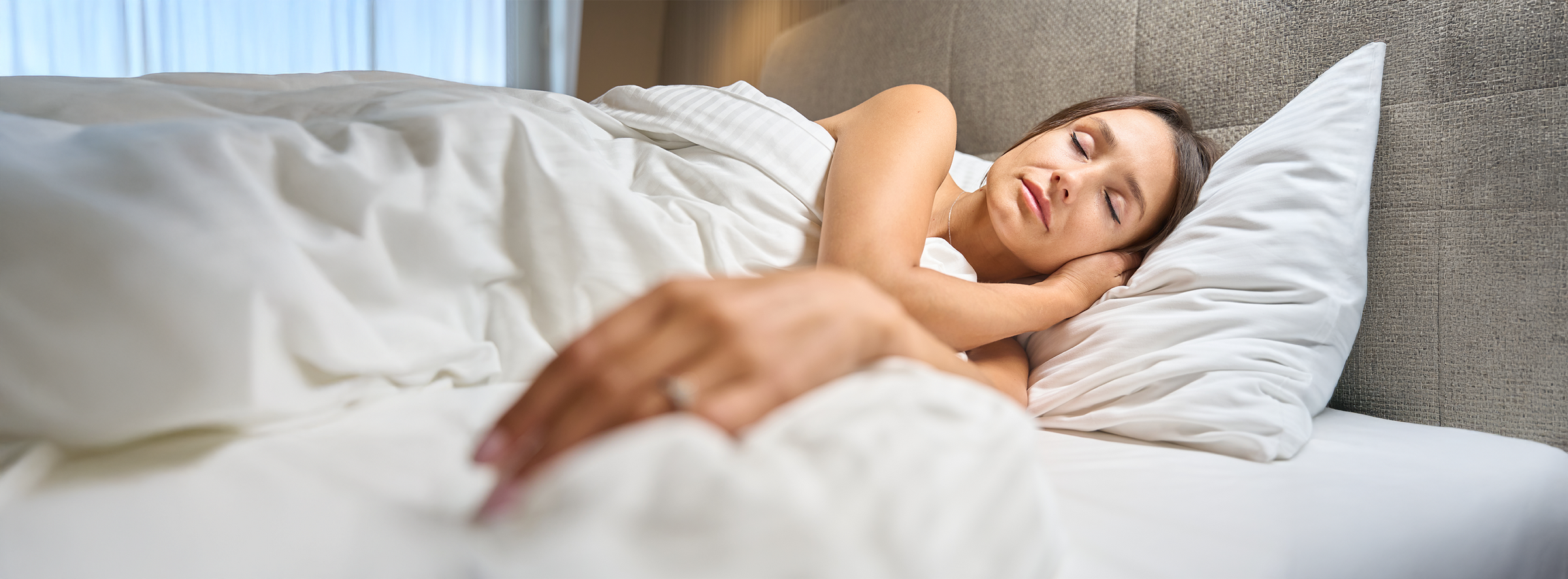
Thermoregulation is your most powerful natural lever. A cool room, breathable natural fabrics, and easing back on alcohol directly soothe the vasomotor changes at the heart of hormonal sleep shifts.
-
Light, food, and movement work as a system. Morning sunlight, phytoestrogen-rich foods, magnesium-rich evenings, and gentle movement nourish hormonal rhythm naturally and protect skin at the same time.
Your sleep is changing. Maybe it has shifted gradually, earlier waking, lighter nights, a little more warmth through to morning. Maybe it has arrived alongside a new phase of your cycle, a season of stress, or the early months of perimenopause. And alongside the sleep change, your skin feels different too. More reactive, less luminous, drier in ways your old routine no longer reaches. These are not separate problems. They are the same beautiful hormonal story, told through different tissues.
Understanding the relationship between oestrogen, sleep architecture, and skin biology does not just explain why these changes arrive together. It points toward the natural levers that genuinely move the needle, the daily rituals and gentle choices that work with your body's recalibration, not against it.
THE OESTROGEN-SLEEP ARCHITECTURE
Oestrogen does so much more than regulate reproduction. It plays a fundamental role in the architecture of sleep itself, supporting REM sleep duration, modulating the brain's response to stress, and tuning the thermoregulation that initiates deep sleep. As oestrogen rhythms shift, whether across the luteal phase, through perimenopause, or in seasons of higher stress, sleep architecture changes in ways that are predictable and well documented.
REM sleep duration shifts. Sleep can become lighter and more easily interrupted. The core temperature drop that opens the gate to slow-wave deep sleep becomes a touch less efficient. Vasomotor sensations, the warm waves that may wake you in the small hours, are a direct expression of the hypothalamic thermostat recalibrating as oestrogen levels move.
Progesterone: the body's natural sedative
Progesterone is often overshadowed in the hormonal conversation, but its role in sleep is profound. It has direct calming properties, gently activating the same GABA receptors in the brain that natural sleep relies on. In the second half of the cycle, rising progesterone supports easier sleep onset. As progesterone shifts in the late luteal phase, and progressively through perimenopause, this natural calming presence softens, which is why some nights ask more of you.
Knowing this matters. The change is hormonal, not personal. It is biology recalibrating, not willpower failing. And once you understand the mechanism, you can work with it through the natural levers that genuinely help.
Sleep across the hormonal transition
Research published in Menopause: The Journal of The Menopause Society found that around 40% of women in perimenopause experience meaningful changes to sleep, compared with approximately 15 to 20% of premenopausal women of similar age. The biology behind this is well understood: shifting vasomotor patterns and changes in sleep architecture both flow from the natural rhythm of oestrogen and progesterone. Knowing this transforms the experience, what feels random becomes a recognisable pattern that natural levers can address.
The skin connection: collagen, hydration, and your hormonal rhythm
Oestrogen directly nourishes skin biology through receptors found throughout every layer of the skin. These receptors guide collagen synthesis, hyaluronic acid production, skin barrier integrity, sebum balance, and wound healing. As oestrogen rhythms shift, all of these processes recalibrate, producing the textural changes that arrive in perimenopause: gentle dryness, softer elasticity, more sensitivity, a finer skin density.
The sleep changes that travel alongside hormonal shifts add another layer to this story. Lower-quality sleep elevates cortisol, which can degrade collagen at the matrix level. It softens the deep sleep phases when human growth hormone, the skin's primary repair signal, is naturally released. And it lifts the level of background inflammation. The skin changes of perimenopause are not just hormonal, they are amplified by sleep disruption, and the most powerful skin support you can give yourself is restorative sleep.
Sleep, food, light, and movement, these are not soft adjuncts to hormonal health. They are the foundations on which every hormonal rhythm is built.
Dr. Lara Briden, Hormone Repair Manual, 2021
WORKING WITH YOUR HORMONAL RHYTHM
1. Track your cycle's impact on sleep
For premenopausal women, sleep quality is not constant across the month, it follows a beautiful, predictable pattern shaped by hormonal rhythm. Sleep is typically at its best in the follicular phase (days 1 to 14), as oestrogen rises. It softens in the late luteal phase (days 21 to 28), when both oestrogen and progesterone fall together. Tracking this pattern transforms it from frustrating to navigable. The lighter nights before your period are hormonal, not personal.
Practical levers for the late luteal phase: lean into temperature management, ease back on caffeine and alcohol (which carry more weight in this part of the cycle), and protect a consistent wake time and a gentle wind-down window so the sleep you do get is rich and restorative.
2. Thermoregulation is your most powerful natural lever
For women in perimenopause, the most impactful sleep support targets thermoregulation directly. A cool bedroom (16 to 18°C), breathable natural fabrics that wick moisture and let heat dissipate, and stepping back from alcohol (which significantly intensifies vasomotor sensations) all soften the frequency and intensity of warm waves through the night. These are not lifestyle extras. They address the central biological mechanism behind hormonal sleep changes.
3. The melatonin-oestrogen partnership
Oestrogen supports melatonin production and melatonin receptor sensitivity. As oestrogen rhythms shift, melatonin onset can move slightly later and its amplitude soften, meaning the natural sleep signal arrives a touch later, a touch quieter. Light becomes one of your most powerful gentle tools: dimming bright and blue-spectrum light in the two hours before bed, and stepping into natural morning sunlight within 30 minutes of waking, both help your circadian melatonin rhythm hold steady through the hormonal transition. For women in perimenopause, these are foundational, not optional.
4. Foods, plants, and minerals that work with your biology
The natural world offers genuine support during hormonal transition. Phytoestrogen-rich foods (flaxseed, sesame, fermented soy, lentils, chickpeas) provide gentle plant compounds that nourish oestrogen rhythm without overriding it. Magnesium-rich foods and magnesium glycinate in the evening support GABA activity, the same calming pathway progesterone uses. Adaptogens such as ashwagandha and rhodiola, used thoughtfully, support the cortisol rhythm that hormonal shifts can heighten. None of these are silver bullets. Together, they form a quiet, daily foundation that nourishes the rhythm you are navigating.
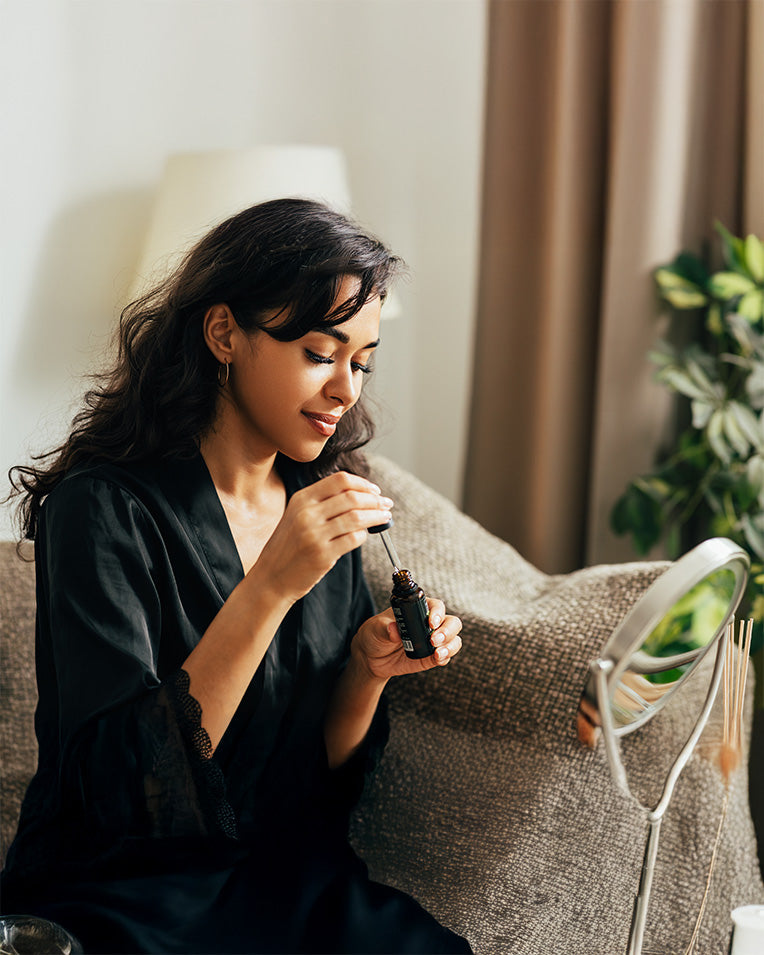
5. Skin support that works with the biology
During hormonal transition, skin care is most effective when it supports what the body is naturally recalibrating: barrier integrity (ceramide-rich moisturisers), collagen support (consistent peptides and gentle retinoids at night, when skin is in active repair), and reduced inflammation (minimal, kind routines that do not add stressors to a sensitised barrier). The aim is not to override the change. It is to support the skin's own repair during the sleep windows you are creating.
6. Movement, breath, and the nervous system
Gentle daily movement and breathwork are quietly powerful here. Walking, yoga, and resistance training all support hormonal rhythm and bone density through the transition. Slow nasal breathing, particularly extended exhales in the wind-down window, activates the parasympathetic nervous system and softens the cortisol load that hormonal shifts can amplify. The body responds to consistency over intensity, daily small inputs, gently held, do more than occasional grand efforts.
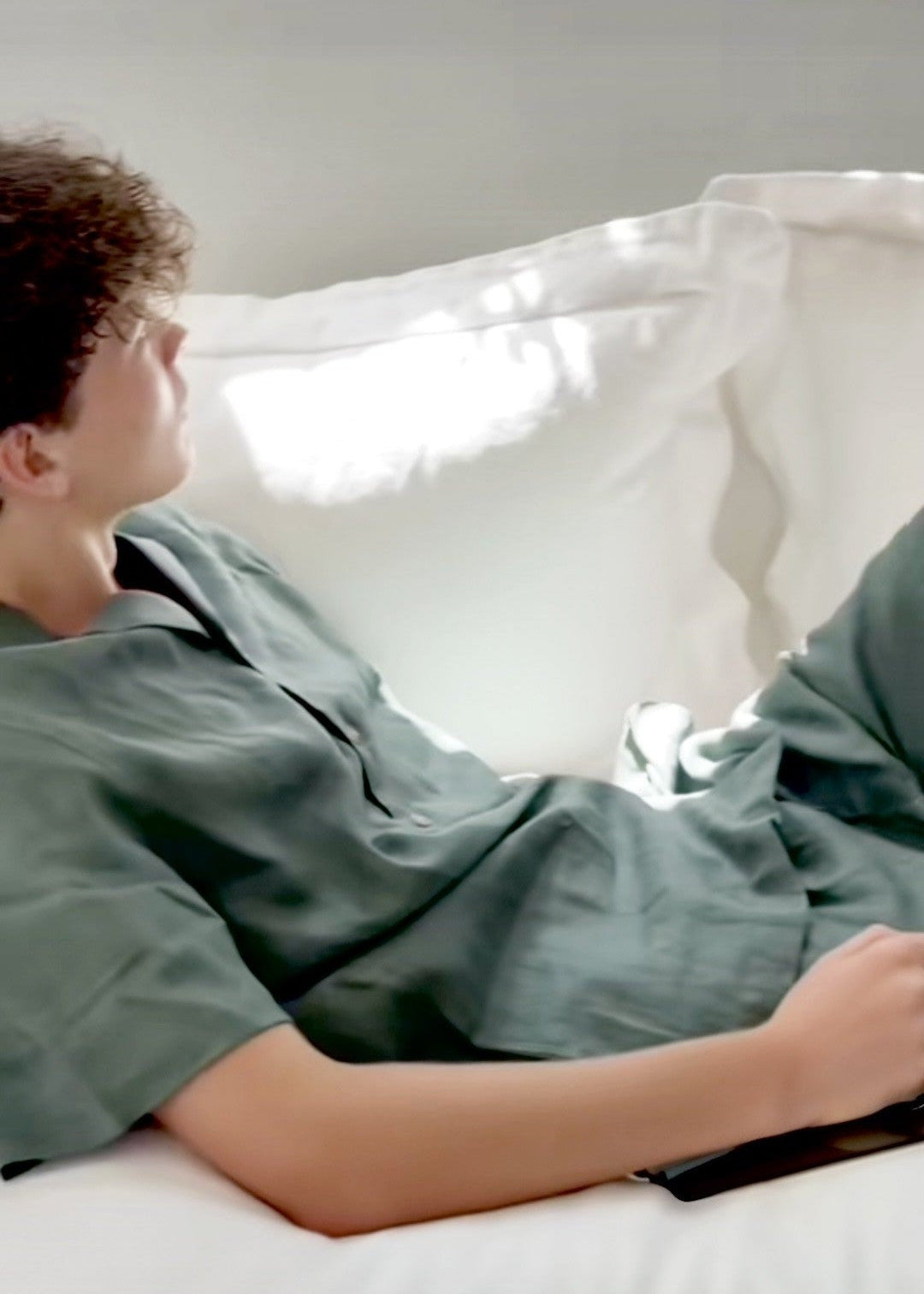
For women navigating hormonal sleep changes, whether across the cycle or through perimenopause, the fabric surrounding the body through the night is not a neutral factor. Breathable, moisture-responsive natural fibres soften the intensity of vasomotor sensations, support the core temperature drop that deep sleep relies on, and stay quietly comfortable through the temperature shifts hormonal transition brings. Goodnap restwear is made for exactly this.
Baker, F.C. et al. (2018). Sleep and sleep disorders in the menopausal transition. Sleep Medicine Clinics, 13(3), 443 to 456.
Jehan, S. et al. (2015). Sleep disorders in postmenopausal women. Journal of Sleep Disorders & Therapy, 4(5), 212.
Mong, J.A. & Cusmano, D.M. (2016). Sex differences in sleep: impact of biological sex and sex steroids. Philosophical Transactions of the Royal Society B, 371(1688).
Briden, L. (2021). Hormone Repair Manual. Greenpeak Publishing.
Mosconi, L. (2024). The Menopause Brain. Avery.
Cassidy, A. et al. (2006). Critical review of health effects of soybean phytoestrogens in postmenopausal women. American Journal of Clinical Nutrition, 84(2), 358 to 369.
Boyle, N.B. et al. (2017). The effects of magnesium supplementation on subjective anxiety and stress, a systematic review. Nutrients, 9(5), 429.