






-
Temperature is sleep's master switch. A core body temperature drop of 1 to 1.5°C is required to initiate deep sleep, and anything that prevents this directly reduces your most restorative sleep stages.
-
A warm bath 90 minutes before bed is one of the most evidence-backed sleep interventions available. The rapid cooling that follows accelerates the thermal descent your brain needs.
-
Your bedroom temperature matters more than most people realise. Keep it between 16°C and 19°C, every degree above this measurably reduces deep sleep time.
-
Fabric choice is a thermoregulation intervention. Breathable, moisture-wicking fabrics allow your skin to continue radiating heat throughout the night, synthetic fabrics trap it.
-
Hormones often drive the heat. If your warmth spikes around your cycle or into perimenopause, the mechanism is hormonal, and worth understanding separately.
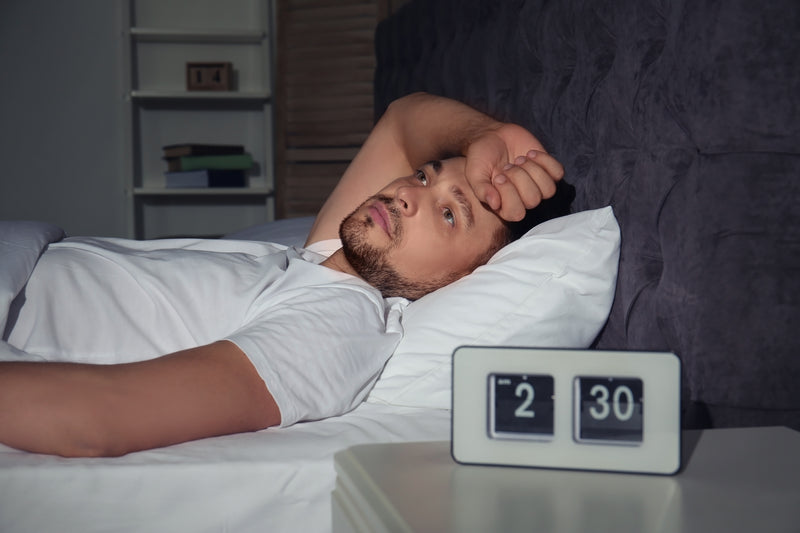
It's 2am. You've kicked off the duvet, one leg is hanging out, the window is cracked even though it's February. You're not sick. You're not anxious. You just run hot, and no one has ever really explained why some bodies heat up at night, or what's actually happening when they do. This isn't a nuisance. It's a biology problem with a biology solution.
The night sweats, the restless sleep, the waking damp and disoriented, these are signs that your body's thermoregulation system is struggling with one of its most critical overnight tasks: orchestrating the precise core temperature drop that unlocks deep, restorative sleep.
TEMPERATURE IS SLEEP'S MASTER SWITCH
Sleep isn't triggered by darkness or tiredness alone. One of the most powerful biological cues for sleep onset is a drop in your core body temperature, typically of around 1 to 1.5°C, that begins in the early evening and reaches its lowest point in the first half of the night. This thermal descent is not a side effect of sleep. It is one of the primary mechanisms that initiates it.
Your body achieves this cooling through a process called peripheral vasodilation, essentially, dilating the blood vessels in your hands and feet to radiate heat away from your core. It's why you often feel warm in your extremities right before sleep. For most people, this system works invisibly. For hot sleepers, something in this chain is either delayed, disrupted, or overwhelmed, by hormones, environment, metabolic rate, or the fabric surrounding the body all night long.
Why some people run hotter than others
Metabolic rate plays a significant role, people with higher resting metabolic rates generate more internal heat as a baseline. Hormonal fluctuations, particularly changes in oestrogen and progesterone across the menstrual cycle, directly affect hypothalamic temperature regulation, the brain region responsible for the body's internal thermostat. Stress hormones, particularly cortisol and adrenaline, can also interfere with the body's ability to vasodilate efficiently, keeping core temperature elevated when it should be falling.
The core temperature drop that unlocks deep sleep
Research from the Centre for Human Sleep Science confirms that a core body temperature drop of 1 to 1.5°C is required to initiate and maintain slow-wave (deep) sleep. When this drop is impaired, by environment, hormones, or fabric, time spent in deep sleep is measurably reduced, even if total sleep duration appears normal. It's not just about how long you sleep. It's about how cool you can get.
The deep sleep connection
Deep sleep, specifically slow-wave sleep, is the stage responsible for physical restoration, immune function, growth hormone release, and cellular repair. It is the sleep your body most urgently needs and the stage most vulnerable to temperature disruption. When your core can't cool, you spend less time in deep sleep, and no amount of extra time in bed fully compensates for that lost restoration.
Night sweats compound the problem further. The act of sweating is your body's emergency cooling system, but it also disrupts sleep continuity, can cause dehydration, and creates the uncomfortable dampness that pulls you out of sleep cycles entirely.
The bedroom environment, including what you wear to bed, is one of the most controllable variables in your sleep quality. Most people optimise everything except this.
Dr. Eus van Someren, Netherlands Institute for Neuroscience, 2021
THE THERMOREGULATION TOOLKIT
The good news: because temperature is a mechanical problem, it responds to mechanical solutions. Here's what the research actually supports for hot sleepers:
1. The warm bath paradox
Taking a warm, not hot, bath or shower 60 to 90 minutes before bed is one of the most replicated sleep interventions in the literature. The warmth dilates peripheral blood vessels, dramatically increasing heat loss from the skin's surface. The rapid cooling that follows triggers exactly the core temperature drop your brain needs to initiate deep sleep. This counterintuitive intervention has been shown in multiple studies to reduce sleep onset time and increase slow-wave sleep duration.
2. The 18°C room rule
Sleep researchers broadly agree that the optimal bedroom temperature for most adults falls between 16°C and 19°C, with 18°C frequently cited as the sweet spot. Every degree above this threshold meaningfully reduces the time your body spends in slow-wave sleep. If your room runs warm, prioritising cooling it, through ventilation, a fan, or air conditioning, is among the highest-return interventions available to a hot sleeper.
3. Fabric is not neutral
What you wear to bed directly affects your body's ability to thermoregulate. Synthetic fabrics trap heat and moisture, creating a microclimate around the body that prevents the skin from radiating heat efficiently. Natural, breathable fibres, particularly those with moisture-wicking properties, allow the skin to continue its thermoregulatory work throughout the night. This isn't a small difference. Studies on textile choice and sleep quality consistently show measurable improvements in deep sleep duration and night waking frequency when fabric choice is optimised for thermoregulation.
4. Hydration before bed
Mild dehydration increases core body temperature and makes night sweats more intense. Drinking 250 to 300ml of cool water in the hour before bed supports your body's cooling mechanisms without causing disruptive waking to use the bathroom. Avoiding alcohol is equally important, alcohol causes peripheral vasodilation initially but leads to rebound warming in the second half of the night, precisely when slow-wave sleep is most critical.
Goodnap restwear is designed specifically for the body's overnight thermal needs, breathable, moisture-responsive fabric that allows your skin to radiate heat efficiently, supports the core temperature drop that deep sleep requires, and stays dry through the night. Because for hot sleepers, what you wear to bed is a sleep intervention in itself.
Harding, E.C., Franks, N.P. & Wisden, W. (2019). The temperature dependence of sleep. Frontiers in Neuroscience, 13, 336.
Haghayegh, S. et al. (2019). Before-bedtime passive body heating by warm shower or bath to improve sleep. Sleep Medicine Reviews, 46, 124 to 135.
Van Someren, E.J.W. (2021). Brain mechanisms of insomnia: New perspectives on causes and consequences. Physiological Reviews, 101(3), 995 to 1046.
Okamoto-Mizuno, K. & Mizuno, K. (2012). Effects of thermal environment on sleep and circadian rhythm. Journal of Physiological Anthropology, 31(1), 14.